📘 Ages 6–7 · 8 free packs
Arabic Worksheets for Grade 1 (Ages 6–7)
In Grade 1 Arabic moves from letters to reading: short vowels (harakat), sukoon, tanween, and joining letters into words. These free worksheets cover that step in order, from reading بَ بِ بُ to telling كتابٌ from كتابًا.
If a child is still unsure of some letter shapes, start with the alphabet tracing pack for those letters first — reading goes faster once every letter is automatic.
What children can usually do at this age
- Read any letter with fatha, kasra, damma or sukoon.
- Tell the three tanween endings apart and read short words with them.
- Write the letters in their joined forms and copy short words.
- Count, read and write numbers to twenty.
The worksheets, in the order to use them
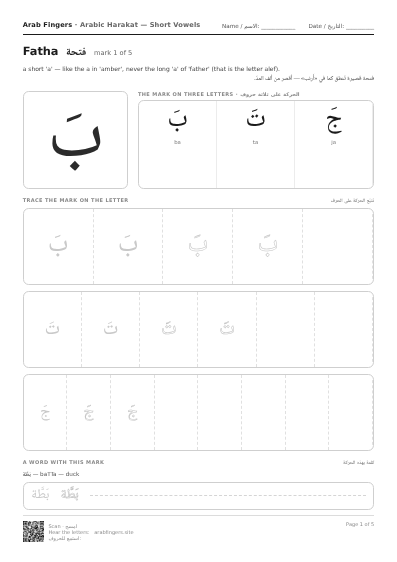
1. Arabic Short Vowels (Harakat) Worksheets
5 pages · Ages 5–8
Fatha, kasra, damma, sukoon and tanween — one sheet each, on real letters.
⬇ Download the PDF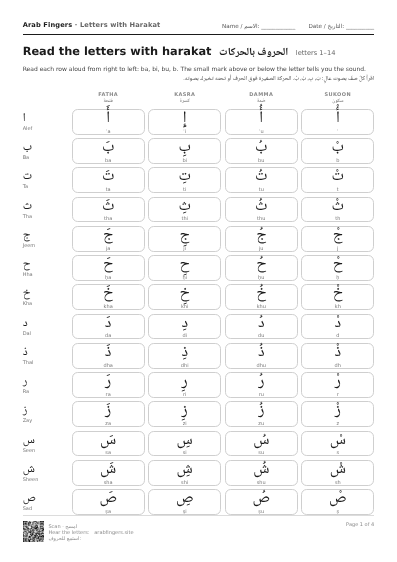
2. Arabic Letters with Harakat (Chart + Tracing)
4 pages · Ages 5–8
All 28 letters with every short vowel: read a row a day, then trace it.
⬇ Download the PDF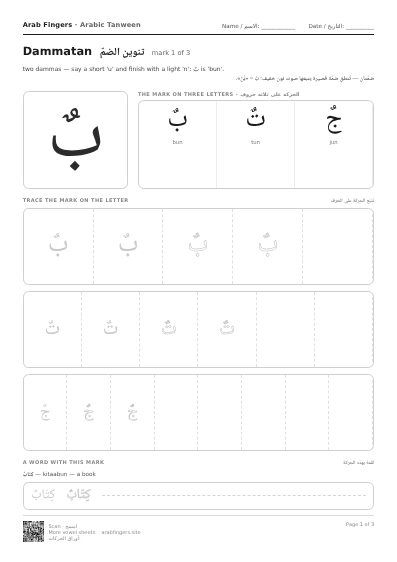
3. Arabic Tanween Worksheets (ـٌ ـً ـٍ)
3 pages · Ages 5–8
The three tanween endings on the same word — كتابٌ، كتابًا، كتابٍ.
⬇ Download the PDF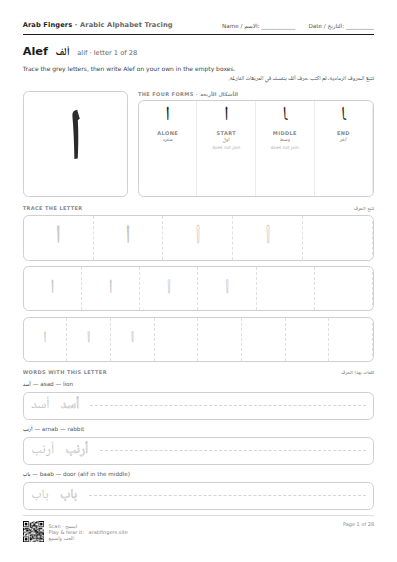
4. Arabic Alphabet Tracing Worksheets
28 pages · Ages 4–7
Revision for any letter that is still slow, with its four joined forms.
⬇ Download the PDF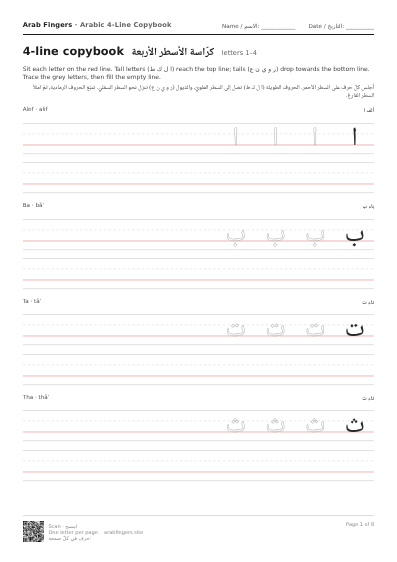
5. Arabic 4-Line Copybook (Handwriting Practice)
8 pages · Ages 5–9
Neat handwriting on 4-line ruling — letter size and the baseline, which first-grade copying needs.
⬇ Download the PDF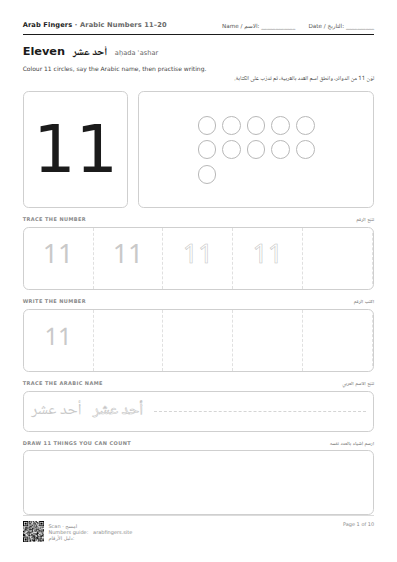
6. Arabic Numbers 11–20 Tracing Worksheets
10 pages · Ages 4–7
Numbers 11–20 with their Arabic names to trace.
⬇ Download the PDF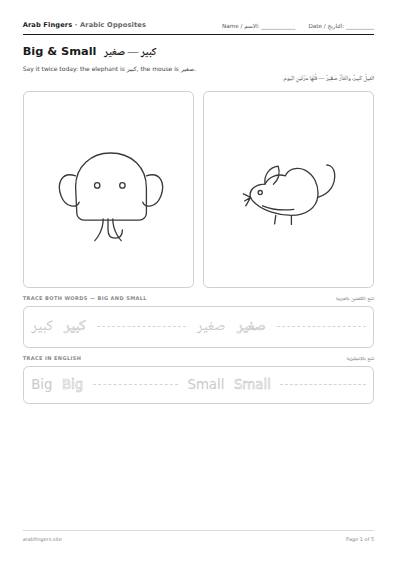
7. Arabic Opposites Coloring Book
5 pages · Ages 4–7
Word pairs to read and trace — a step towards reading whole words.
⬇ Download the PDF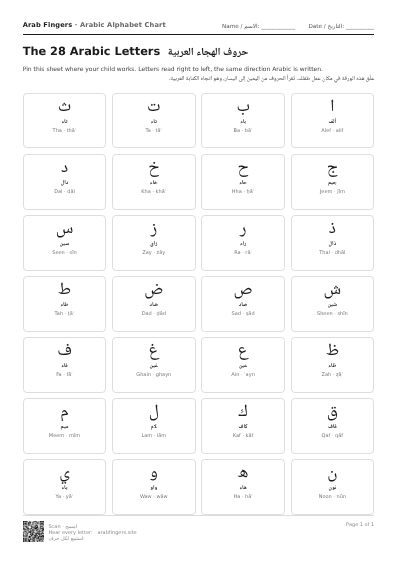
8. Complete Arabic Workbook (everything above)
176 pages · Ages 3–7
Everything above and more in one PDF, for a term's printing in one go.
⬇ Download the PDF
A 4-week starter plan
Ten minutes a day, five days a week.
- Week 1 — the fatha, kasra and damma sheets; read the first rows of the letters-with-harakat chart aloud every day.
- Week 2 — sukoon; finish reading the chart; trace its first page.
- Week 3 — the three tanween sheets; numbers 11–15.
- Week 4 — numbers 16–20; opposites pairs to read; revise any slow letters.
Questions
What do children learn in Grade 1 Arabic?
Typically: reading letters with the short vowels and sukoon, tanween, long vowels with alif, waw and ya, joining letters into words, and reading short sentences. Numbers usually go up to twenty and beyond.
My child is in Grade 1 but still mixes up letters. Where should we start?
Start with the alphabet tracing pages for just the letters they mix up — often look-alikes such as ب ت ث or ح ج خ — and use the dots to tell them apart. Move on to harakat once those are steady.