🎒 Ages 4–6 · 10 free packs
Arabic Worksheets for Kindergarten (KG1 & KG2, Ages 4–6)
Kindergarten is when Arabic letters move from colouring to tracing. These free packs cover the kindergarten years in order: KG1 (about age 4–5) learns letter shapes and sounds; KG2 (about 5–6) traces every letter in its four forms and starts reading letters with fatha, kasra and damma.
Every pack is a direct PDF download. Print one sheet at a time — one letter a day takes a child through the alphabet in about six weeks.
What children can usually do at this age
- KG1: hold a pencil and stay near a dotted line; recognise and name most letters; count to ten.
- KG1: write the first letter of their own name with help.
- KG2: trace all 28 letters and notice that a letter changes shape inside a word.
- KG2: read a letter with fatha, kasra or damma (بَ بِ بُ) and write numbers 1–10.
The worksheets, in the order to use them
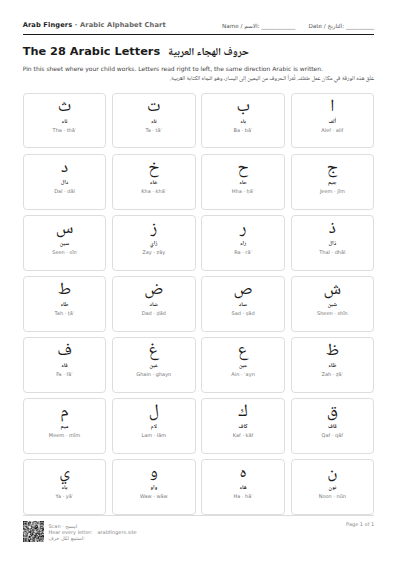
1. Arabic Alphabet Chart (1 page)
1 page · All ages
The reference on the wall for both years.
⬇ Download the PDF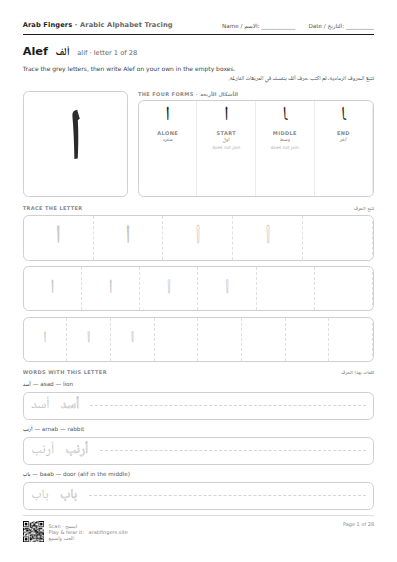
2. Arabic Alphabet Tracing Worksheets
28 pages · Ages 4–7
The core of kindergarten Arabic: one page per letter with its four forms and graded tracing rows.
⬇ Download the PDF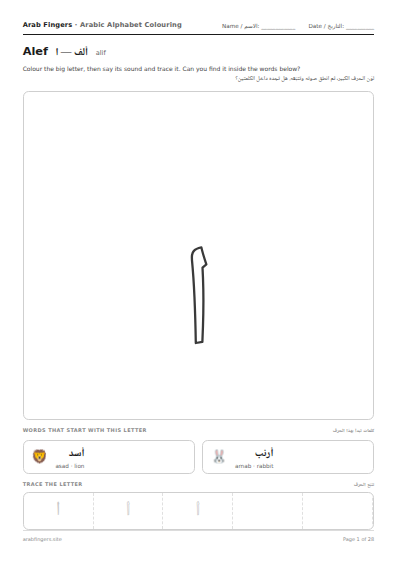
3. Arabic Alphabet Coloring Book — Big Bubble Letters
28 pages · Ages 3–6
KG1: colour the letter before tracing it — the shape is learned twice.
⬇ Download the PDF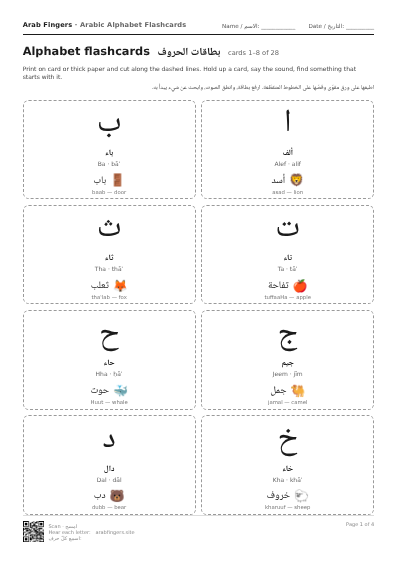
4. Arabic Alphabet Flashcards (28 Cut-Out Cards)
4 pages · Ages 3–7
Quick recognition games between worksheets: say the sound, find the card.
⬇ Download the PDF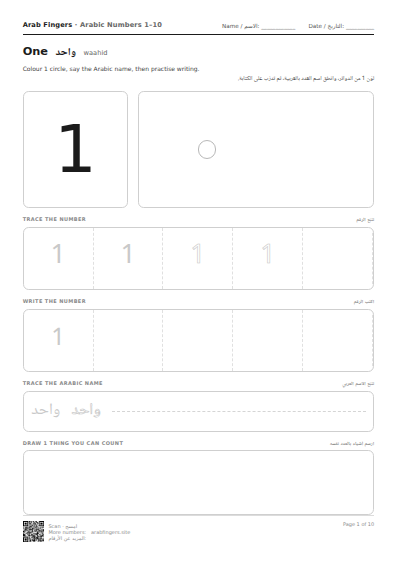
5. Arabic Numbers 1–10 Tracing Worksheets
10 pages · Ages 3–6
Numbers 1–10: count, trace and write each one, with its Arabic name.
⬇ Download the PDF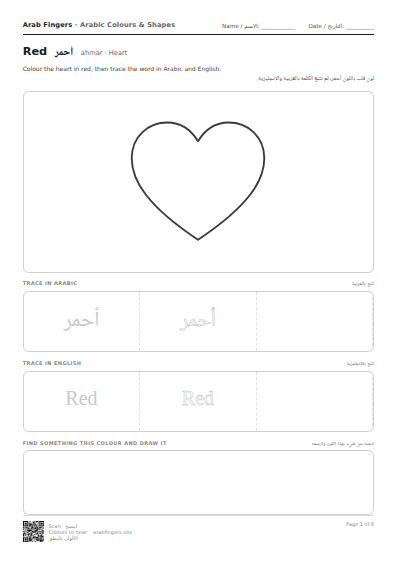
6. Arabic Colours & Shapes Worksheets
6 pages · Ages 3–6
Colour words to trace in Arabic and English.
⬇ Download the PDF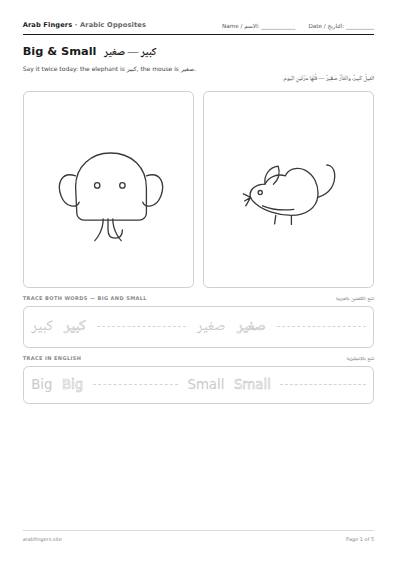
7. Arabic Opposites Coloring Book
5 pages · Ages 4–7
Pairs like big and small — the first describing words.
⬇ Download the PDF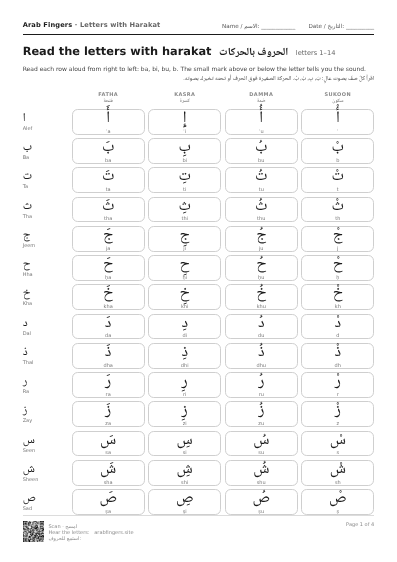
8. Arabic Letters with Harakat (Chart + Tracing)
4 pages · Ages 5–8
KG2: every letter with fatha, kasra, damma and sukoon — the step from letters to reading.
⬇ Download the PDF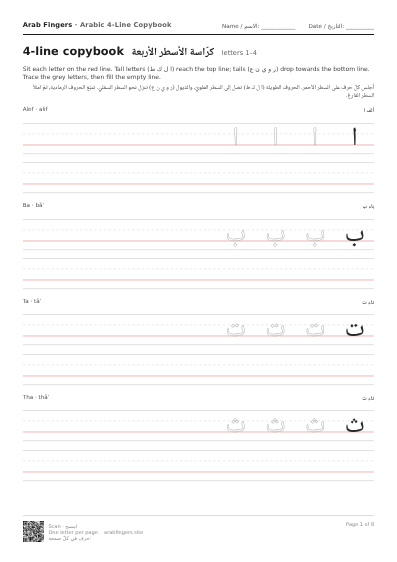
9. Arabic 4-Line Copybook (Handwriting Practice)
8 pages · Ages 5–9
KG2: each letter on 4-line ruling, so it sits on the line at the right size.
⬇ Download the PDF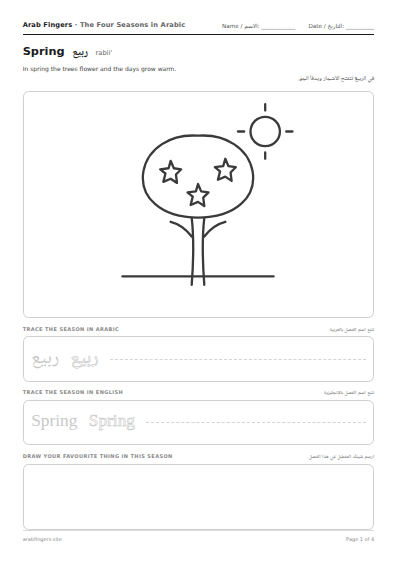
10. The Four Seasons in Arabic — Coloring Book
4 pages · Ages 4–7
A calm colouring pack for the end of a session.
⬇ Download the PDF
A 4-week starter plan
Ten minutes a day, five days a week.
- Week 1 — alphabet chart on the wall; trace ا ب ت ث, one a day, saying the sound each time.
- Week 2 — four more letters, starting with the ones in the child's name; numbers 1–3.
- Week 3 — four more letters; numbers 4–6; colours on a quiet afternoon.
- Week 4 — four more letters, then (KG2) read the first rows of the letters-with-harakat chart: بَ بِ بُ.
Questions
What Arabic should a child know by the end of kindergarten?
Most kindergarten programmes aim for children to recognise and write all 28 letters, know their sounds, read letters with the three short vowels, and count and write numbers to ten. Every school differs, so treat this as a direction, not a test.
What is the difference between KG1 and KG2 in Arabic?
KG1 (around age 4–5) focuses on letter shapes, sounds and names; KG2 (around 5–6) adds writing every letter, the four letter forms and reading letters with harakat, as a bridge to first grade.
Can teachers print these for a whole class?
Yes — print and photocopy as many as your class needs. Please link to this page rather than re-uploading the files, so families always get the current version.