🧸 Ages 3–4 · 9 free packs
Arabic Worksheets for Preschool (Ages 3–4)
At three and four, Arabic worksheets should be mostly colouring and naming, not writing. These nine free packs are the ones that work at this age: big shapes to colour, one Arabic word per page, and numbers counted with circles rather than written.
Expect scribbles outside the lines and pages abandoned halfway. That is normal. What matters at this age is that the child hears the Arabic word while their hands are busy.
What children can usually do at this age
- Colour a large shape with a chunky crayon, mostly inside the lines.
- Point to a letter on a chart when you name it, and say a few letter names back.
- Count up to five objects, sometimes ten, and repeat Arabic number words after you.
- Name colours and animals in Arabic after hearing them a few times.
The worksheets, in the order to use them
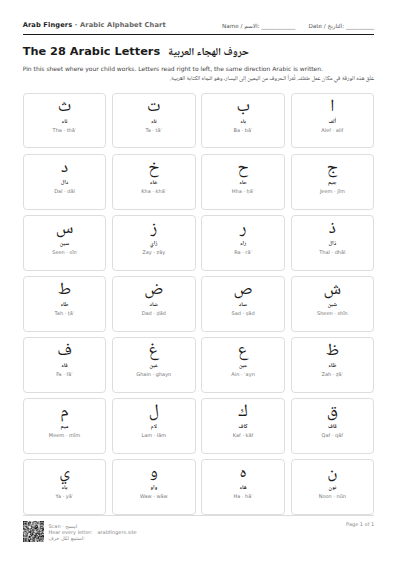
1. Arabic Alphabet Chart (1 page)
1 page · All ages
One page on the wall. Point and name a letter a day; no writing needed.
⬇ Download the PDF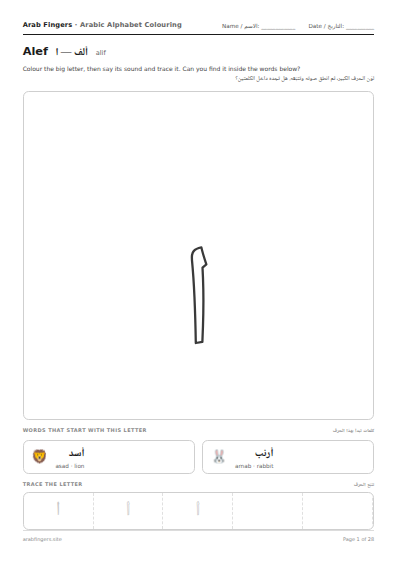
2. Arabic Alphabet Coloring Book — Big Bubble Letters
28 pages · Ages 3–6
Each letter as a big bubble shape to colour — the first contact with letter shapes, through colouring rather than tracing.
⬇ Download the PDF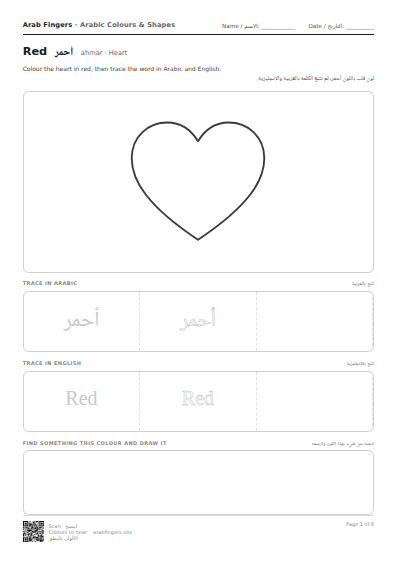
3. Arabic Colours & Shapes Worksheets
6 pages · Ages 3–6
One colour and one shape per page: colour it, say the Arabic name.
⬇ Download the PDF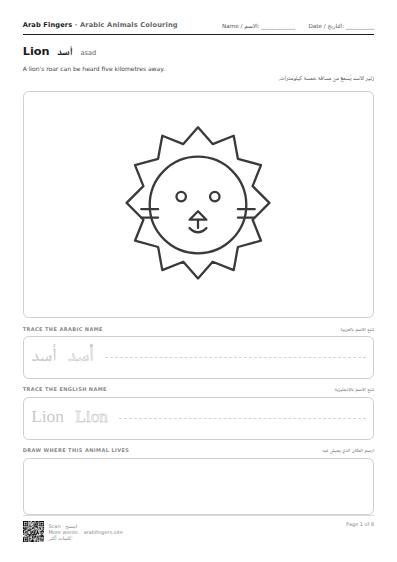
4. Arabic Animals Colouring & Word Tracing
8 pages · Ages 3–7
Animals are the words three-year-olds most want to name.
⬇ Download the PDF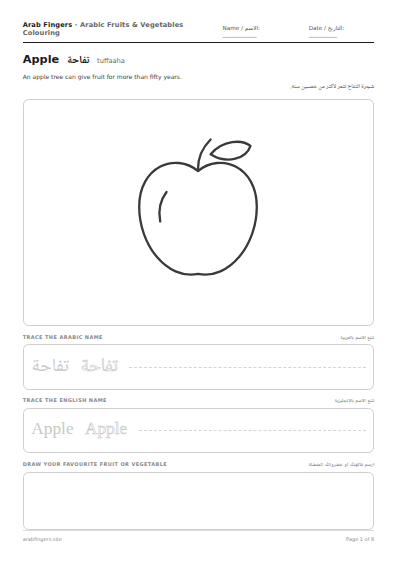
5. Arabic Fruits & Vegetables Coloring Book
8 pages · Ages 3–7
Food words get used at every meal, so they stick.
⬇ Download the PDF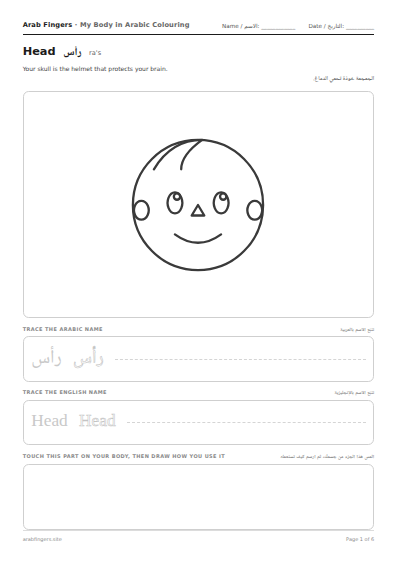
6. My Body in Arabic — Coloring Book
6 pages · Ages 3–6
Touch the part, colour it, say it — words learned with the whole body.
⬇ Download the PDF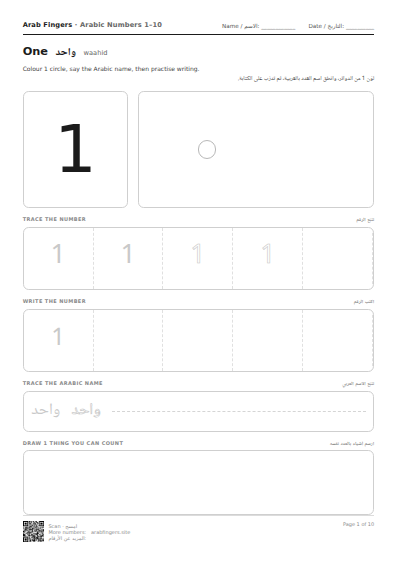
7. Arabic Numbers 1–10 Tracing Worksheets
10 pages · Ages 3–6
Use the counting circles and the drawing box; skip the writing rows until four or five.
⬇ Download the PDF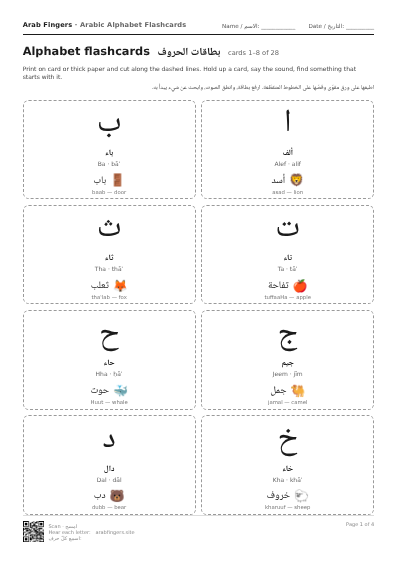
8. Arabic Alphabet Flashcards (28 Cut-Out Cards)
4 pages · Ages 3–7
Picture cards to hold up and name — a game, not a lesson.
⬇ Download the PDF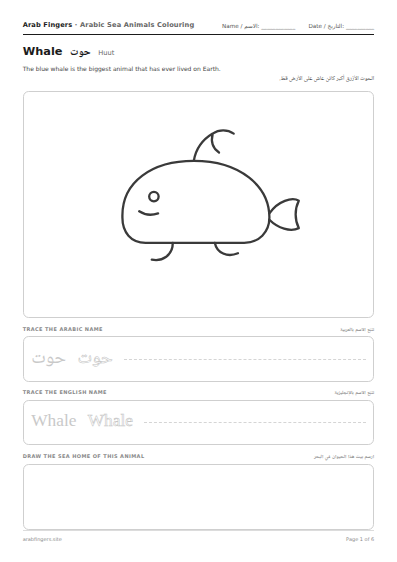
9. Arabic Sea Animals Coloring Book
6 pages · Ages 3–7
A second set of animals for when the first is finished.
⬇ Download the PDF
A 4-week starter plan
Ten minutes a day, five days a week.
- Week 1 — pin up the alphabet chart; colour two animals and two colours.
- Week 2 — one bubble letter a day from the alphabet colouring book (start with the letters in the child's name).
- Week 3 — numbers 1–5 with the counting circles; fruits and vegetables at snack time.
- Week 4 — body parts, then let the child choose any page they want to repeat.
Questions
Can a 3-year-old use Arabic tracing worksheets?
Most three-year-olds are not ready to trace letters with a pencil. Colouring big letter shapes and tracing with a finger work better; real pencil tracing usually starts around four.
How long should an Arabic activity last at this age?
Five to ten minutes. Stop while the child still wants more — the next session goes better than if you stop after they lose interest.